Over the next year the Learning team at Kettle’s Yard will be sharing stories on the blog from our quarterly sessions with
Cam Sight
, a charity that provides support for blind and partially sighted people living and working in Cambridgeshire. Kettle’s Yard have been working with Cam Sight for over four years and we got off to a great start in 2014 with our first session exploring the themes of the
Victor Skipp
exhibition.
In the descriptive tour we explored the drawing techniques of the work of
Linda Karshan
and
Bob Law
, considering the importance of each artist’s process in regard to the final outcome of the work. For example, we discussed how Law reconsidered the potential of drawing by shifting his focus from imitating nature to consider instead his emotional response to the natural world through abstract mark making. Lying in open fields, Law would transcribe his subjective experience of that landscape, at that specific time, into a symbolic code.
Filipa Pereira-Stubbs
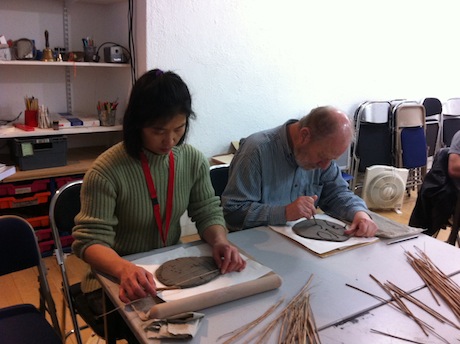
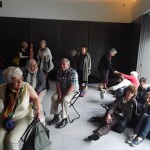
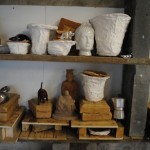
then led a tactile and music based workshop exploring our subjective relationship with our surroundings, asking participants to create clay landscapes in response to a range of sounds.
Filipa wrote the following about her experiences of leading the practical activity:
It is always a bit of a lurch to settle into the act of creating. It requires time and focus to allow the senses to awaken, to become more aware, to begin to engage and be playful with ideas, concepts, questions. At best, we can enjoy not knowing what we are heading into, or what we are seeking. At worst we can feel we haven’t got a clue, we don’t know what to do next, or we’re no good at art. These sessions provide clear ideas and concepts from the very rich, vast, unwieldy and sometimes mysterious world of contemporary art, and a sense of held space and time where we are all safeguarded from the usual rush and noise of daily getting about, so that we can immerse ourselves into the unfamiliar and the unknown. When we began to work with the clay, the room was filled with the best kind of silence – concentrated, quiet, easy, gentle. Engaged. Interested. It was a delight to be a part of that group, and to watch ideas unfold across the dimensions of the clay landscapes. This group has a real strength in withdrawing judgement, staying open to newness, whilst robustly questioning of ridiculousness. Good to be with.
Below is some feedback from the Cam Sight group about the session, which I hope sheds more light on the participants’ experiences.
I feel the tours are very well conducted with the focus on one particular concept or exhibition allowing for a very informative and thought-provoking tour. Moreover, the tour combined with a workshop afterwards works well to bring out a creative side in me that unfortunately rarely raises its head.
Warren Wilson, Cam Sight Participant
I just wanted to say thank you for the Victor Skipp workshop and all of the previous workshops. Before losing my eyesight at the age of 26, I used to draw and paint. It is nice, now at the age of 42, to create with clay and learn about local artists.
Matt Darkin, Cam Sight Participant
The continuation of Kettle’s Yard descriptive tours and tactile art workshops has an enormous impact on the issue of the inclusion of art in the lives of blind and partially sighted people. Lucy is passionate about sharing her knowledge and her descriptive skills mean no one is excluded from experiencing the fabulous exhibitions at the gallery. Likewise, Filipa offers the group such warmth and encouragement; everyone feels relaxed and confident enough to totally immerse themselves in her workshops. The pieces of work produced speak for themselves.
A new musical venture at Kettle’s Yard
/ Saturday 25th January
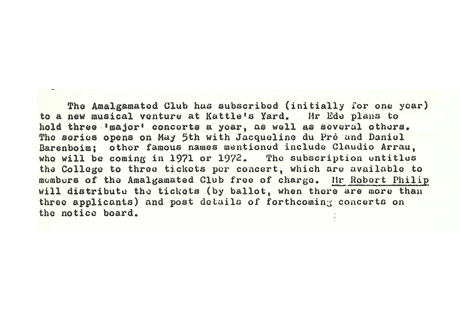
When I am not at Kettle’s Yard, I have the pleasure of working with the archive at Wolfson College, Cambridge. The two institutions are similar in age, but very different (though equally fascinating) in character. Imagine my delight to see these two worlds collide in this college newsletter from Easter 1970, in which the social club takes up Jim Ede’s offer of tickets for the ‘new musical venture at Kettle’s Yard’ – the very beginnings of our music programme!
Read more about our current music programme
here
.
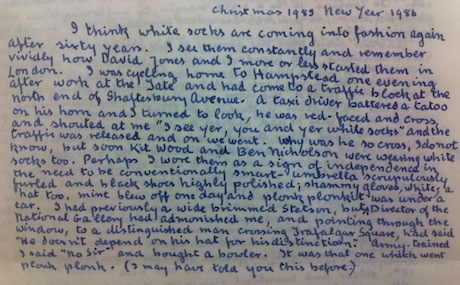
It’s looking very unlikely that we’ll have a white Christmas here at Kettle’s Yard this year, but there is still a chance that the socks Father Christmas leaves in our stockings may be white. Do you remember when they were last in fashion? How about the time before? Here is an entertaining reflection from one of Jim Ede’s Christmas letters on the cyclical nature of fashion.
Merry Christmas from all at Kettle’s Yard!
Kettle’s Yard House and Gallery are closed 23 December 2013 – 7 January 2014 inclusive, we wish you a happy holiday.
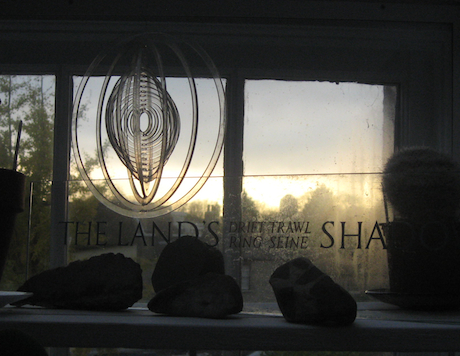
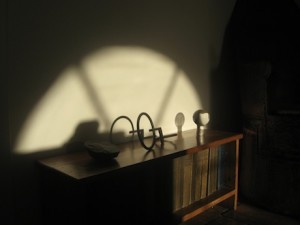
Kettle’s Yard House is now open from 12-5pm (Tuesday to Sunday) giving visitors a chance to see the house in a whole new light.
For Jim & Helen Ede the play of light & shadow in the evenings at Kettle’s Yard were very special, as you can see from the following extracts:
‘I was once told a story about some friends who had been invited to dinner with Jim and Helen at Kettle’s Yard. When they arrived on the designated evening, the house was dark and it seemed as if no-one was home. The dinner guests thought perhaps they’d got the wrong date. As they were about to leave, Jim opened the door and exclaimed “Come in! Come in! We don’t turn the lights on because the light is so exquisite at this time of day!’
Winifred Nicholson (Music of Colour)
, p.10
‘I have wanted to find some way to show pictorially the immense pleasure I got each evening as I walked around Kettle’s Yard in the dark. It was never really dark because of large street-lamps which shed their light through the windows, and every month there was the great beauty of moonlight. All this created a new and special adventure, so much was blotted out and so much revealed.
Suddenly when I supposed that I could get no further, there arrived by post from Canada a newspaper cutting about Kettle’s Yard with an article and photograph by Catherine Campbell, and all my wishes were fulfilled. Here through the magic of the camera I could find again the wonder of my moonlit home. The mystery of shadows revealing to me the presence of hidden objects..’
Jim Ede,
A Way of Life
, p.120-121
These beautiful images of the house were taken by our Visitor Assistants, see more
.
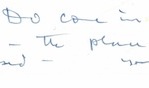
‘Do come in as often as you like – the place is only alive when used’
/ Tuesday 12th November
We have recently been fortunate enough to be given a letter that Jim Ede wrote in 1964, in response to a thank you note from an undergraduate who had visited Kettle’s Yard. In typical style, Jim expresses concern about whether he really is providing pleasure to others through his endeavours at Kettle’s Yard, and draws strength from the expression of gratitude. He ends the letter ‘Do come in as often as you like – the place is only alive when used’.
This is very true of the house, but equally true of the archive. The core of the
archive
at Kettle’s Yard is Jim Ede’s personal papers, which formed part of his gift to the University of Cambridge in 1966. These document his interactions with artists and other key figures throughout his life; the development of the House and its collections; and the ongoing work of Kettle’s Yard as a leading centre for modern and contemporary art. It is a rich and fascinating resource, but only of any real value if it is used.
I joined Kettle’s Yard as Archivist a couple of months ago, and one of my main tasks over the next 2 years is to develop a digital catalogue of the archival collections at Kettle’s Yard. This will be a significant step towards making them more available, both for researchers and for use throughout our programme of activities. Do keep an eye on the blog for updates, and for pictures of items from the archive.
“Please leave candle above for me to take down…”
/ and other unusual signs by Jim Ede / Friday 31st May
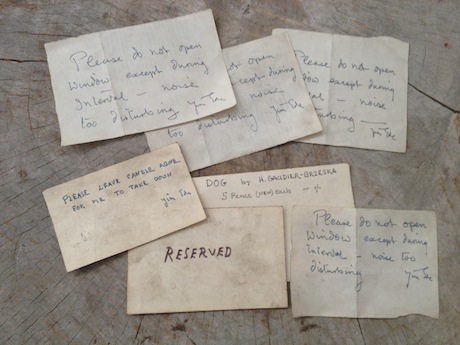
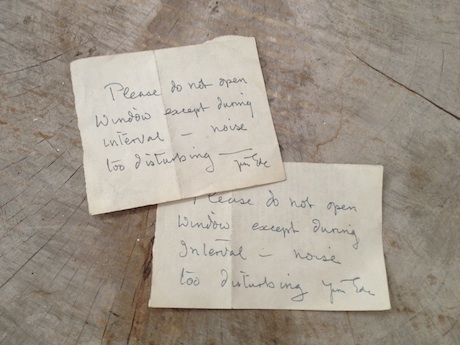
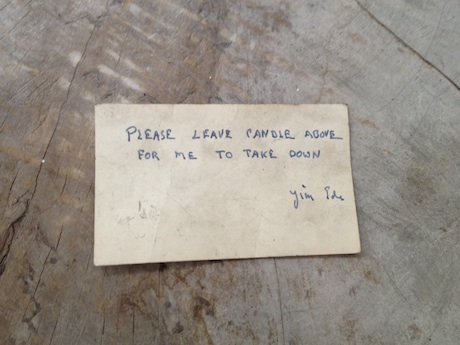
In the Kettle’s Yard house labels are not used alongside the works of art. In part this is due to Jim Ede’s wish for it to be “a living place where works of art would be enjoyed, inherent to the domestic setting, where young people could be at home unhampered by the greater austerity of the museum or public art gallery, and where an informality might infuse an underlying formality.” Jim’s desire for a ‘lived in’ environment was matched with a focus on balance, each object, art work and piece of furniture placed so that it created a perfectly balanced whole. It could be said that to label certain objects, identifying them from the milieu, might disrupt Jim’s balanced vision, which turned the whole house into an artwork in itself.
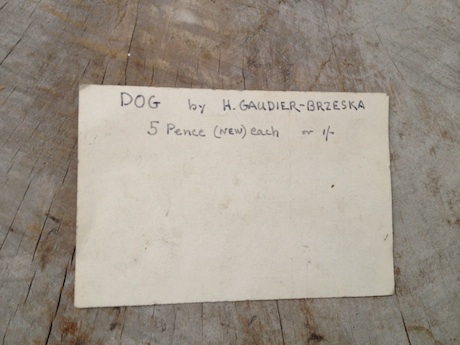
However on occasions, with the events and music at Kettle’s Yard, it was necessary for some kind of signage to be used – and below you can see some hand written ones by Jim himself. Ranging from signs directing people to not open windows during music concerts to the price of a replica of ‘Dog’ by Henri Gaurier-Brzeska (5 pence). These hand written signs were found when we emptied a section of the Kettle’s Yard house in preparation for essential maintenance work. Things like this are really wonderful to discover, giving a snapshot into Jim’s time at Kettle’s Yard and imagining why certain signs came to be… “Please leave candle above for me to take down – Jim Ede”.
Grappling with nanotechnology, meteorites and fossils
/ Interpretation in Katie Paterson's exhibition / Sunday 5th May
Our new Assistant Education Officer, Lucy Wheeler, tells us about her first week at Kettle’s Yard where she was involved with the interpretation of our latest exhibition,
Katie Paterson
.
I spent my first week at Kettle’s Yard grappling with nanotechnology, meteorites and fossils, working on the interpretation for
Katie Paterson’s exhibition
, which opened on the 26 April. Katie engages with a number of scientific subjects – including astronomy, astrophysics and palaeontology – creating subtle, thoughtful works that make manifest the unimaginable small and distant workings of the universe.
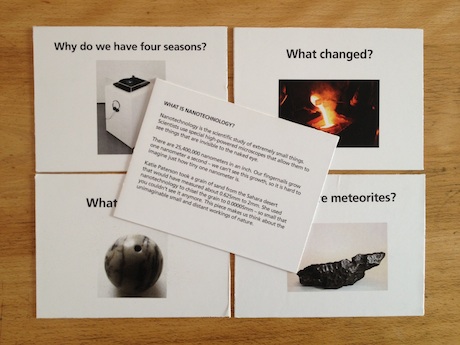
I was initially a little nervous about creating education resources that could provide insight and understanding into extremely complex scientific topics. We wanted to create something that could provide exciting bite-sized chunks of information to best invite visitors to enjoy Katie’s curious and poignant interventions into metaphysical themes and material wonders.
Starting with Katie’s piece,
Campo del Cielo
my nervousness quickly dissolved as I delved into the fascinating world of meteorology. I found out that Katie’s meteorite is about the same weight as a baby elephant and it had been around floating around for 4.5 billion years – before the earth even existed.
I hope that our visitors find these colourful facts enjoyable. After watching a
video
of how Katie transformed and changed the meteorite, I wanted to explain this fascinating process to our visitors too.
Our Education Officer Rosie and I presented the information on postcards that can be easily held. We hope the cards will provide intriguing yet relatable information to hopefully open new ways into Katie’s compelling work.
If you have any thoughts about our interpretation, please do
– we are always looking to improve your experience of the gallery and your feedback is welcome. If you haven’t already, please come and look, discuss and touch – yes touch – Katie’s meteorite!
~ Lucy Wheeler
Katie Paterson exhibition runs until 23 June. The gallery and St Peter’s Church are open 11.30-5pm Tuesday-Sunday.
A helping hand from the Courtauld Institute of Art
/ Behind the scenes / Thursday 2nd May
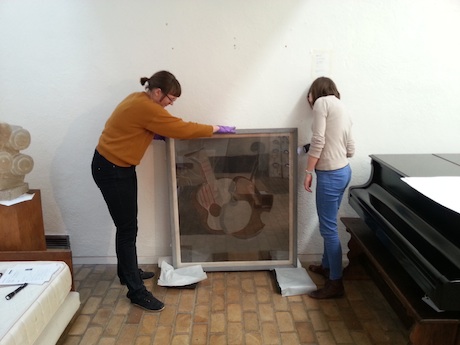
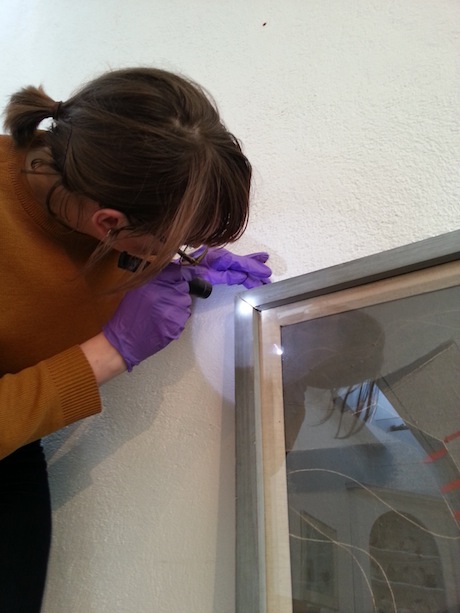
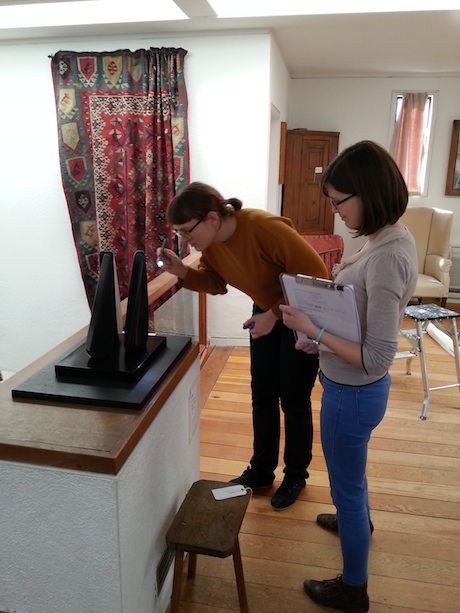
With the task of removing the objects and artworks from the extension area of the Kettle’s Yard house we had the help of conservation students from
The Courtauld Institute of Art
to help with the condition checking of the artworks, an important part of the process prior to removing the artworks and objects from the house. Here Chloe Head, conservation student, tells us more about what was involved.
We carefully checked each art work to make sure it was in a stable condition and safe to travel. This involved making sure that the paintings were secure in their frames and the paint was not flaking. We highlighted any pieces that need treatment before they could be moved or ones that would need to be handled in specific ways.
These checks are really important, the paperwork builds a record of the paintings and sculptures so that we can make sure nothing has happened to them during their journey.
The Kettle’s Yard collection is very special, and it was fantastic to see so many paintings that retain their original unvarnished surface; this allows one to appreciate their subtle matt surfaces. Seeing so many works in the collection by the same artist, such as Alfred Wallis or Ben Nicholson, one can really start to understand how they made the work.
~ Chloe Head
Parts of Kettle’s Yard House will be closed from 24 March to carry out essential maintenance work. We hope to reopen fully by the end of the year.
Please call or
in advance to find out exactly what is open.
An object’s journey
/ Behind the scenes during the Kettle's Yard extension work / Tuesday 23rd April
Kettle’s Yard is currently undertaking essential maintenance on the extension area of the house. For this we have had to temporarily remove part of the collection from this area. If you have visited the Kettle’s Yard house before you will appreciate that this has been no mean feat. It was a major undertaking for our team with such multitude of diverse objects filling every corner – indeed it made us realise the vast number of fantastic objects, large and small, that make up the experience of Kettle’s Yard.
So here you can see the journey of one object as it was safely prepared for removal.
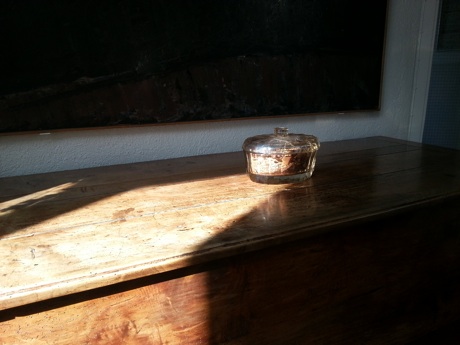
It might be that you’ve never noticed this particular object, a bohemian cut glass casket. Jim carefully positioned such objects alongside artworks, furniture, ceramics and natural objects, with the aim of creating a harmonic whole. His vision was of a place that should not be “an art gallery or museum, nor … simply a collection of works of art reflecting my taste or the taste of a given period. It is, rather, a continuing way of life from these last fifty years, in which stray objects, stones, glass, pictures, sculpture, in light and in space, have been used to make manifest the underlying stability.”
The photograph above was taken by Tom Noblett who found the bohemian cut glass casket bathed in the light one morning.
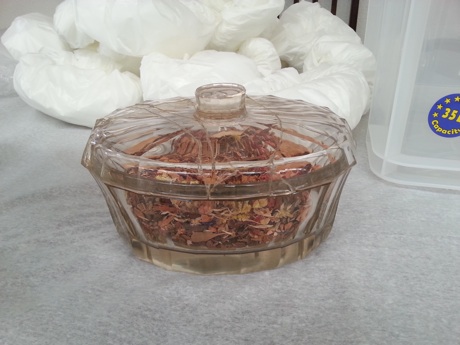
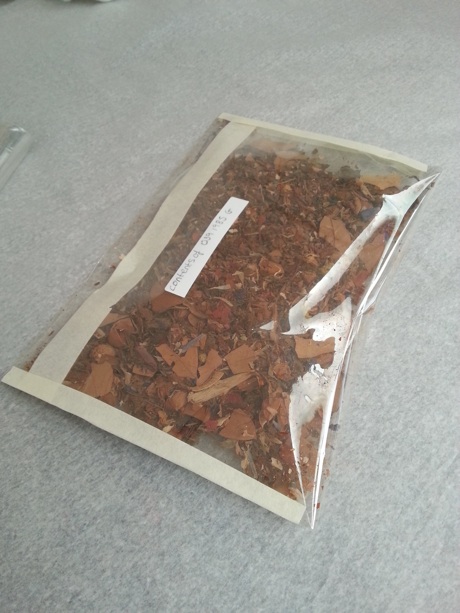
The original contents (potpourri) was decanted and labeled so it later can be easily reunited with the glass casket when it is reinstated back in the house.
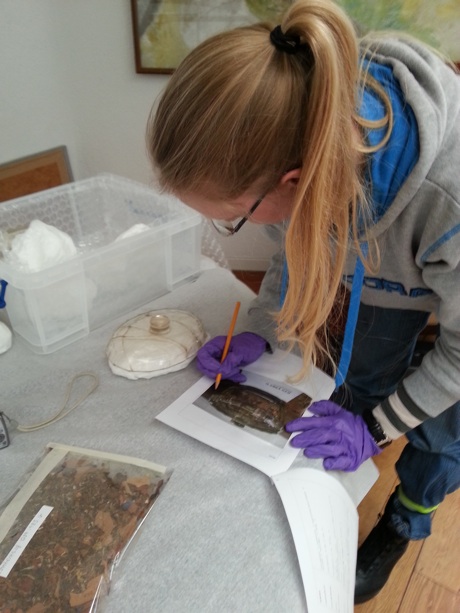
Next the object itself was carefully assessed for its condition, meticulously noted in a condition report.
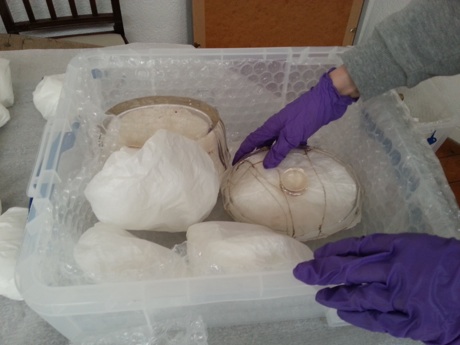
The team then checked the glass which has previously been repaired. Underneath is a packing ball, which has a smooth surface, to support it.
The object is packed, the smooth surface of the balls ensuring the object is protected during transport.
Parts of Kettle’s Yard House will be closed from 24 March to carry out essential maintenance work. We hope to reopen fully by the end of the year.
Please call or email in advance to find out exactly what is open – 01223 748100,
Winter Sun in the House
/ The Invigilators blog / Sunday 3rd March
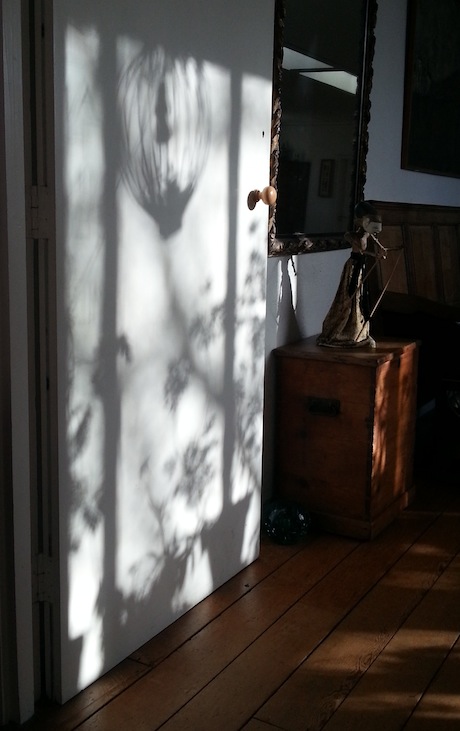
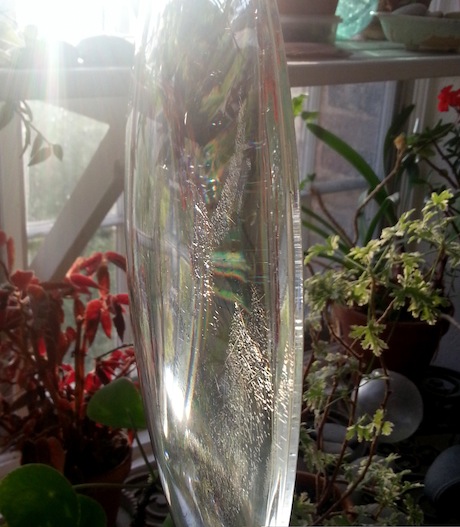
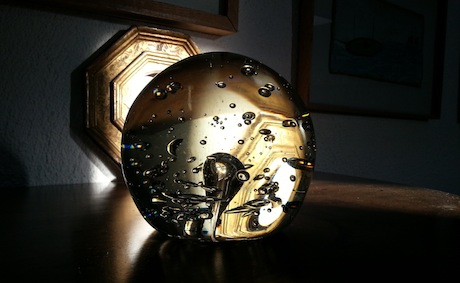
This is what you might find in Kettle’s Yard if you are lucky enough to visit us on a clear day. Low and sheer walls of light slide through the house, cutting the rooms into pieces, and transforming the space into a moving collage of light.
A hanging lens rotates gently.
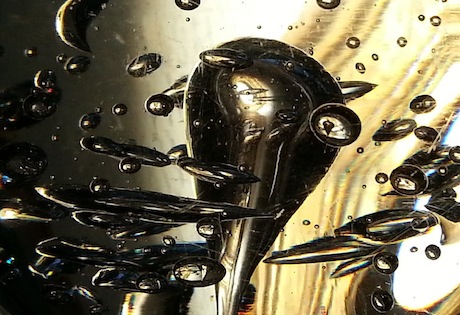
Seen from the side it has become a flecked gemstone – beautifully flawed and intricate.
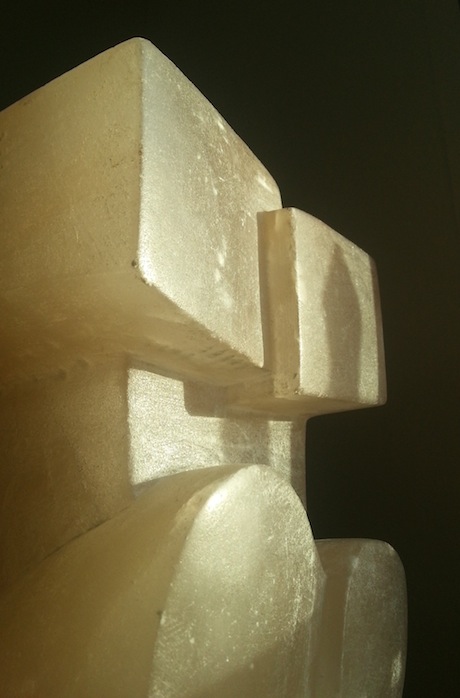
Compare this with George Kennethson’s alabaster carving: it isn’t transparent like the lens, but still preserves the hidden structure and intricacies of the material. His sculpture evokes a desert monolith when viewed in direct sun.
In fact, it almost emits its own mysterious light. You can imagine pulling a blind over the window and for a moment this inner glow remains.
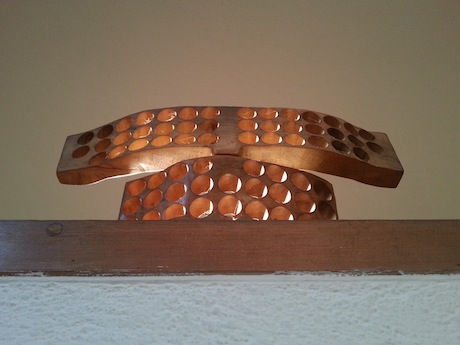
Maitec’s wood carving, on the other hand, doesn’t let any light in (or out); the holes almost make up for this though, and seen from the right angle it too can shine.
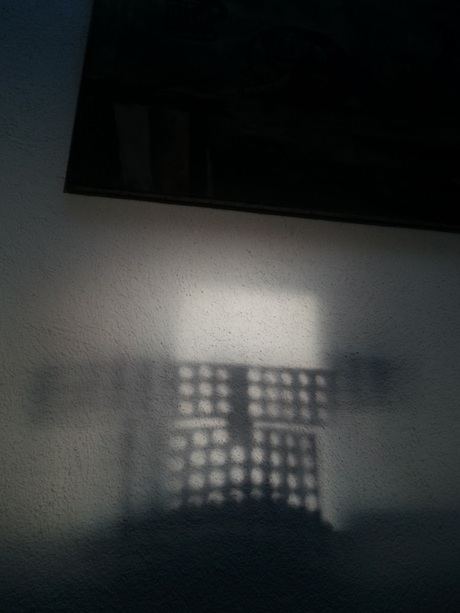
Turn your head and the shadow cast by the same sculpture is a rare enough treat – and always combines with the Ben Nicholson above – but try and get a glimpse of this fleeting moment.
A sunbeam catches the filament of a passing cloud, and just before the cloud obscures it completely, the edges of the projection are momentarily diffused. Multiple angles are overlayed in shadow – the light has split the image.
Patterns emerge in other, unexpected, ways. Looking through a glass ball you can see an empty miniature-frame which once held a Rembrandt.
Multiplied by the air bubbles it is miniaturised further.
So come and chase shadows in the house, whether you’re are a first time visitor or an old hand, but be quick before dull Spring crashes the party.
~ Tom Noblett
Tom works in the house every Wednesday and Friday. Drop in between 2-4pm on a sunny day and he will show you where to find the best shadows.
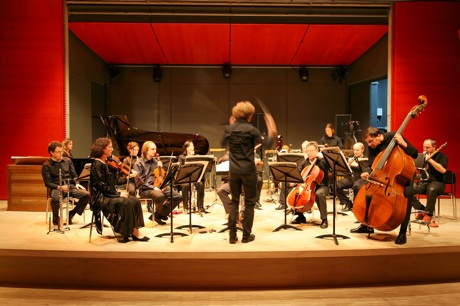
Ensemble Phoenix come to Cambridge
/ New Music Matters / Tuesday 19th February
In the lead up to the
Ensemble Phoenix
concert on 25 March 2013 at
The Divinity School, St John’s College
, Laurie Kent, Kettle’s Yard Music Intern, will be revealing what happens behind the scenes to bring one of Europe’s leading contemporary music ensembles to Cambridge.
Behind the scenes is an interesting place to be. Over the next few weeks I will be interning with Kettles Yard to help publicise and organise the
Ensemble Phoenix concert.
Accustomed to seeing the gritty rehearsal routine that morphs into a polished performance, I will now bear witness to the unseen organisational forces that truly pull a concert together. I will be collaborating with the people working the strings to put an audience in front of a performer under a roof in a situation cemented by music. Being the St. John’s College Music Society Recitals Manager, I have some experience of this procedure. I have found it is the little things that make or break a concert, from the amount of programmes you print to checking if the piano is actually unlocked (a vital component I overlooked once with almost catastrophic consequences).
As a composer and a fan of Contemporary Classical music, I take every opportunity to attend New Music concerts but I think I am in a minority. Publicity is vital for putting on slightly more “difficult” concerts. It seems sad and rather elitist to think of music for musicians and I hope that with the right marketing approach we can show that this music is incredibly exciting for anyone who has the time to listen.
Interpretation
/ Winifred Nicholson: Music of Colour / Friday 30th November
Good interpretation (the information in an exhibition that supports the understanding of the artworks) is a tricky thing to get right – too many words and people are bored… not enough words and people are confused… the wrong words and people are annoyed. It is a tightrope to provide some insights into artworks without explaining away the magic. Rosie and I (the education team) have really enjoyed working with Lizzie and Guy (the exhibition team) on the Winifred Nicholson show. It was a pleasure to read Winifred Nicholson’s amazing writing and think about how best to invite visitors into her world of colour and imagination.
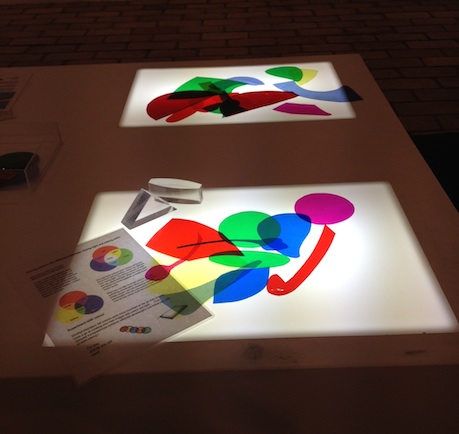
Alongside the text panels and labels for this exhibition, we have added a small range of activities to offer alternative ways of exploring the gallery – as well as looking, talking and reading, we like people to do some making too. In the first gallery, we have a selection of small cards with the invitation for visitors to write poems, give feedback, invent a colour or imagine themselves in a Nicholson landscape. The responses are wonderful – so many people have shared their own creativity with us and it is exciting to see how Nicholson has inspired their contributions. In the second gallery, we have lightboxes and coloured gels (similar to cellophane but thicker) for people to mix their own colours and light. We also have prisms, torches, mirrors and magnifying glasses – tools that bend and distort light and allow visitors to experiment with the same ideas that interested Nicholson. We wanted to create a comfortable space that encourages you to linger and spend longer with the paintings – what else do you see when given a bit more time?
Light boxes with coloured gels - Kettle's Yard gallery
If you have already seen the show, I hope you enjoyed it (and if you haven’t, there are a few weeks left). If you have any thoughts or comments about our interpretation for the exhibition, do please get in touch – we are always looking to improve your experience of the gallery and your feedback is welcome.
Conservation
/ Lady Macbeth / Tuesday 27th November
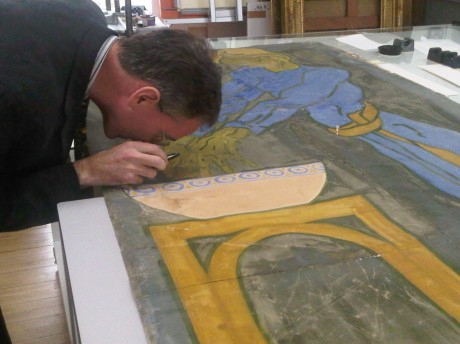
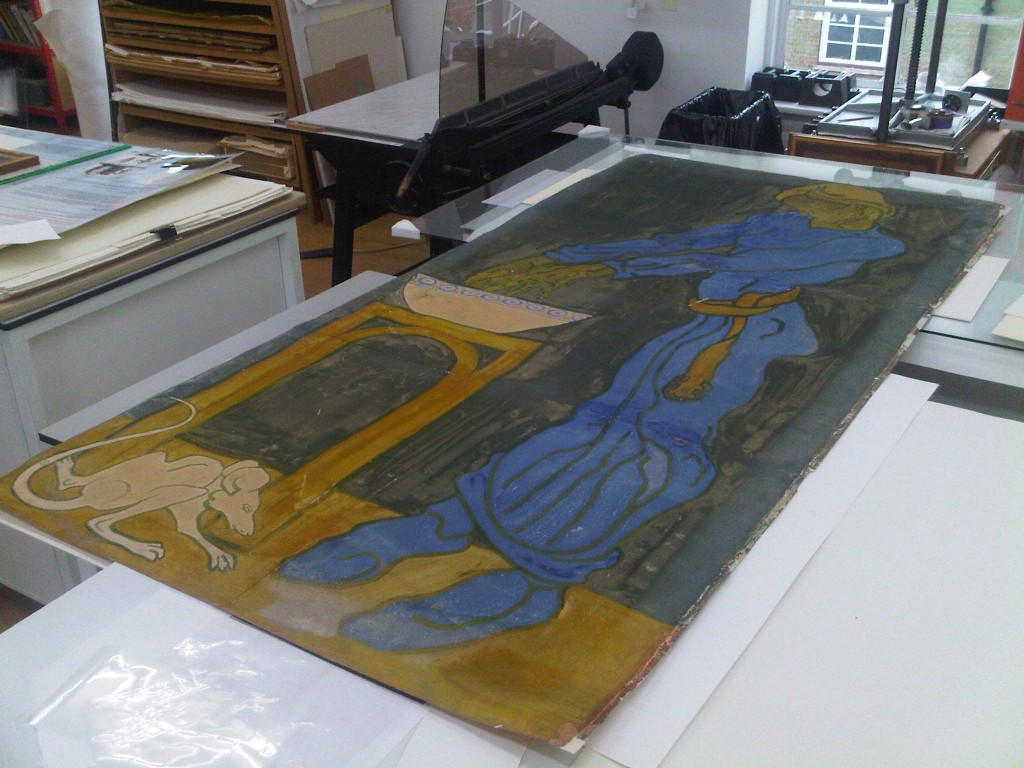
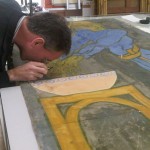
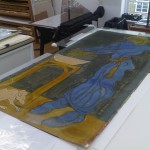
Henri Gaudier-Brzeska’s Lady Macbeth poster, usually on display in the Kettle’s Yard House, is currently undergoing conservation treatment at Museum Conservation Services.
Paper conservator Nicholas Burnett is currently looking for traces of pigment in the blood on Lady Macbeth’s hands, the original colour of the poster would have been quite different. Exposure to light has caused some pigments to fade almost completely away.
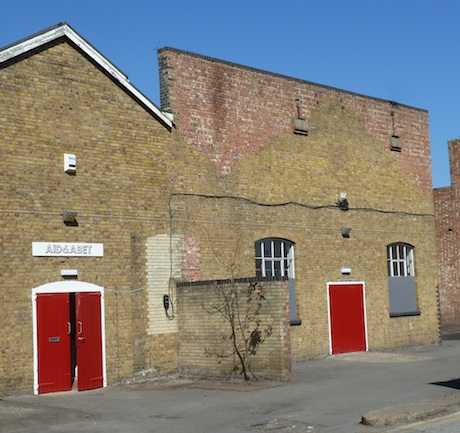
Aid and Abet
/ Exhibition preparations / Friday 23rd November
In the new year two artist-led spaces from the East of England will be temporarily taking up residence in the gallery. Aid & Abet from Cambridge, and Outpost from Norwich, will bring together artists from their memberships to exhibit work, perform and take part in a programme of events.
Here is what David Kefford, co-founder of Aid & Abet, had to say about how preparations for this exciting new collaboration are going.
Following last week’s meeting at Kettle’s Yard we’ve just sent our final project proposal for the January exhibition. We’ve put together and exciting exhibition and events programme, including critique sessions, talks, performances and a residency in the house. All artists confirmed, now to select the artwork. Looking forward to seeing how the work looks in the exhibition spaces.
Friends of Kettle’s Yard
/ Meeting Stephen Chambers / Thursday 1st November
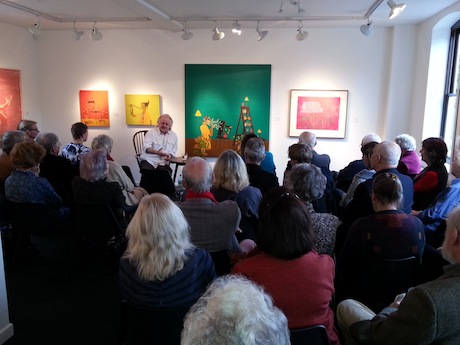
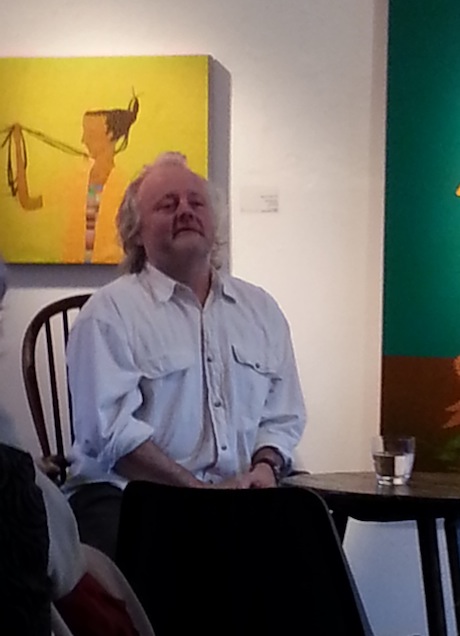
Forty Friends of Kettle’s Yard gathered at the Lynne Strover Gallery in Fen Ditton, Cambridge to hear a fascinating talk from artist Stephen Chambers. Stephen, a Royal Academician, is currently exhibiting his beautiful work simultaneously at Lynne Strover’s gallery and at the Academy itself.
Stephen is a great fan of Kettle’s Yard and many Friends have been following his career closely since the late 1990s when he made a big impression here as Artist Fellow, based at Downing College. After listening to the fascinating talk about the inspiration for his subject matter and his collaborations with many of the world’s leading printers, the Friends viewed his beguiling prints and paintings on view in the
Fen Ditton gallery
.
We were also lucky enough to hear from Stephen about the inside story of the conception and making of his vast print installation ‘The Big Country’ showing at the
Royal Academy
until 2 December.
Stephen has described this 75 panel narrative as ‘my Alexander McQueen moment – the unwearable dress- an anti-print.’ The sixth in the ‘Artists’ Laboratory’ series at the Academy, this epic scale visual narrative, partly inspired by the 1958 movie of the same name, fills the Weston Room and the onlooker is given a sense of the human figure pitted against the sweeping landscapes of Wyoming.
A huge thank you to Stephen for his enduring support for Kettle’s Yard. Don’t miss these concurrent exhibitions of the work of one of this country’s leading contemporary artists.
I spent an invigorating weekend at a cultural hack day recently. This combined the world of arts organisations of the East of England with tech-savvy hackers and web developers, coming together to create beautiful web manifestations of our cultural data. Some of the arts organisations involved were Wysing Arts Centre, the Sainsbury Centre in Norwich, Harlow Sculpture Collection, the Junction, BBC Proms and the Royal Shakespeare Company.
Saturday was a day full of buzz and creation as the developers took our information and began a 36-hour marathon to create beautiful things for us. Meanwhile we attended talks by the brilliant Dr. Zoe Svendsen of
Metis Arts
and Daniel Jones, with his ‘Listening Machine’ which, in partnership with Britten Sinfonia, brings a musical adaptation of social media activity on Twitter. This is featured on the BBC’s and ACE’s
The Space
. This combined with Circumstance’s performance
Of Sleeping Birds
made it an exhilarating day of exchange.
It was exciting to see what could be done in just 36 hours.
Gareth Wild
created an art map featuring Kettle’s Yard and Cambridge arts venues. Some others included “Sculptour”, a sculpture park app for Harlow Sculpture Trail, a treasure hunt app for families attending Firstsite in Colchester and an online storytelling platform for Hoipolloi Theatre Company. For a full list of events and outcomes, you can find them on the
Creative Front
site.
There was a great tone to the event, with some of the best outcomes coming from the collaboration between arts organisations thinking creatively, and being brought to life by those who can make the seemingly far-fetched, possible. I look forward to seeing what comes next…
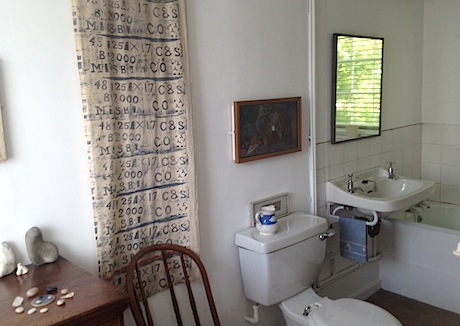
One of our visitors to the House over the weekend told us he used to come and stay at Kettle’s Yard when he was a boy. He remembers they weren’t allowed to have a hot bath – because the condensation from the hot water would damage the paintings in the bathroom. Now that’s suffering for your art.
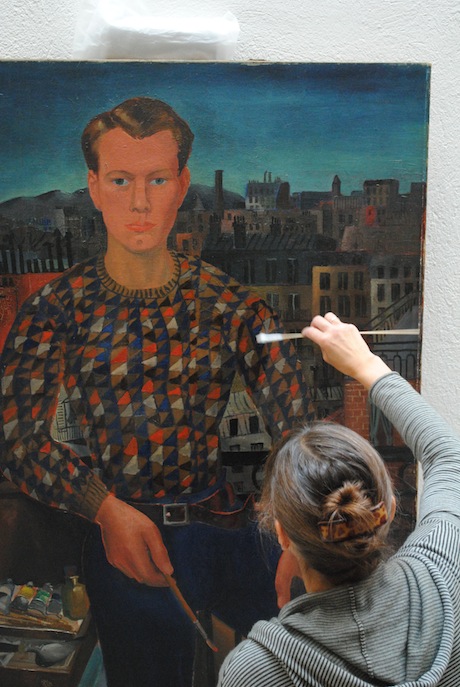
Sally Woodcock with Christopher Wood's Self Portrait, Kettle's Yard
Painting conservation
/ Christopher Wood / Tuesday 17th July
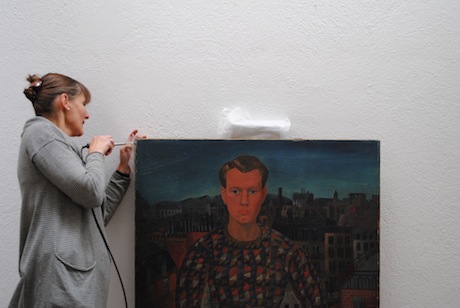
Painting conservator Sally Woodcock has been brought in to prepare Christopher Wood’s
Self Portrait
for its journey to Norwich Castle Museum later this year where it will be on display as part of Cedric Morris and Christopher Wood; A Forgotten Friendship.
Sally Woodcock with Christopher Wood’s Self Portrait, Kettle’s Yard
This autumn Norwich Castle will host the first exhibition devoted to the British artists Cedric Morris (1889-1982) and Christopher Wood (1901-30) focusing on their friendship and the many artistic links between them. Cedric Morris and Christopher Wood; A Forgotten Friendship runs from 20 October to 31 December 2012 at
Norwich Castle Museum
, Norfolk.
Friends of Kettle’s Yard
/ Yorkshire Art Trail / Wednesday 4th July
The Friends of Kettle’s Yard hit the Yorkshire arts trail
From Gaudier Brzeska’s sketch of Ezra Pound nestling between the superb Old Masters at
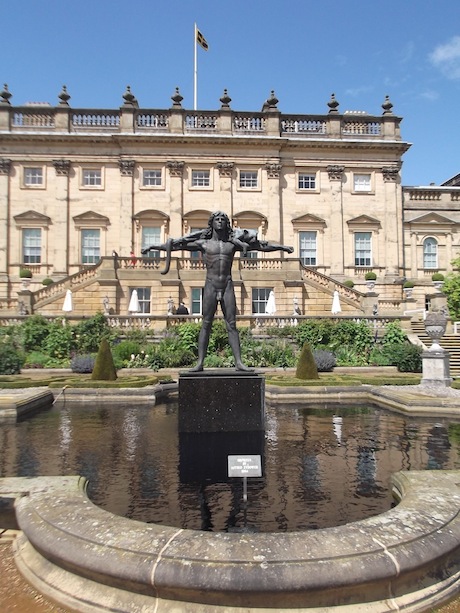
Harewood House
near Leeds to the ebullience of Miro’s late 3D works at
Yorkshire Sculpture Park
, via Fiona Rae’s dazzling show at the
Leeds Art Gallery,
the David Hockney collection at
Salts Mill
and of course the great new
Hepworth Wakefield
….48 Friends lapped up the Yorkshire arts scene over a packed 3 day weekend in late June. We all came away believing there must be something special in the Yorkshire air that gave life to such giants as Moore, Hepworth, Hockney and now of course, Hirst. This lively yet relaxed trip was typical of the great programme of events that Friends of Kettle’s Yard can enjoy.
- Martin Thompson
Click
here
if you’re interested in joining the
Friends of Kettle’s Yard
, which would allow you to take part in their outings, holidays, talks and parties.
Matthew Darbyshire and curator Lizzie Fisher in studio
Matthew Darbyshire
/ Studio Visit / Monday 2nd July
Guy and I headed to Kent to visit
Matthew Darbyshire
in his studio on a wet April morning.
Preparations were underway for an exhibition in Paris. Matt is a
sculptor who is interested in the objects we surround ourselves with,
especially the things we can buy, what they mean to us and where that
meaning comes from. His critical eye for a kind of contemporary
vernacular forces us to think about how we shape our world and how that
shapes us. Looking forward to some interesting conversations when Matt
comes to
Kettle’s Yard
.
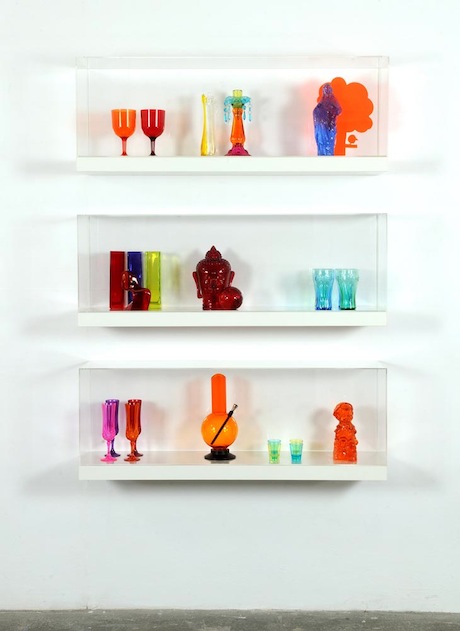
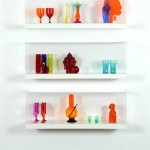
Matthew Darbyshire – Untitled: Shelves No.5, 2008, Various glass and plastic components, 110 x 140 x 30 cm,
Herald St. Gallery
Not many people know this, but a colleague recently told me that Jim had a couple of trays in bright pink plastic and yellow perspex in the 60s. So tea with Jim would have been lapsang souchong in a broken china cup held together with staples on a yellow perspex tray.
Curator’s blog
/ studio visit with Lorna Macintyre / Friday 29th June
After 2 weeks on a Clore programme in Northumberland I flew up to Glasgow to catch the last day of
Matthew Darbyshire’s
show at Tramway, and visited
Lorna Macintyre
in her studio. It was Matt’s largest public exhibition to date – and the product of a number of intense collaborations. I learnt a new phrase: ‘developers vernacular’.
I had a cold so Lorna made me tea and we talked about the work she’s making for Glasgow International, the jars containing strange crystalline growths hiding under tables and on windowledges, Virginia Woolf and the view.
Matthew and Lorna, along with
Jeremy Millar
and
Matei Bejenaru
, are working with Kettle’s Yard over the next year as Associate Artists, and we have invited them to engage, make work and intervene creatively with us onsite, offsite & online. They start work in earnest later this month, and the first opportunity to get to know them and their work will be around a display in the gallery this summer, when they will select works from the collection and show works of their own alongside.
Curator’s blog
/ Kettle's Yard House / Tuesday 29th May
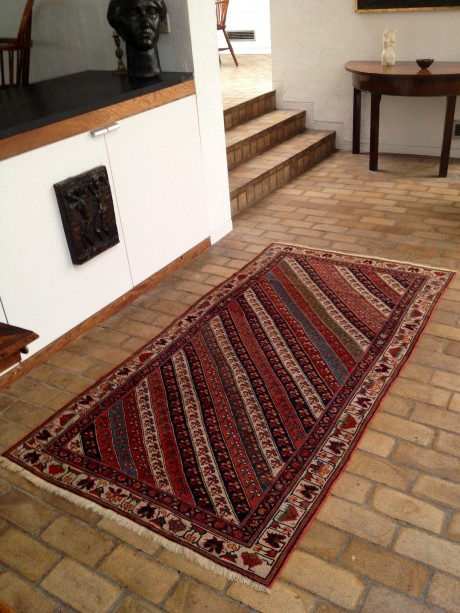
The man from Istanbul brought our rug back today. (Literally, he flew over with it under his arm). He’s been restoring it for a whole year and it looks amazing. He uses vintage yarn to preserve the antique colours and works with traditional weavers from Anatolia to help us keep our rugs in the best condition to resist the daily wear and tear of visitors’ feet.
Next time you visit, don’t forget to look at what’s under your feet. And tread carefully!
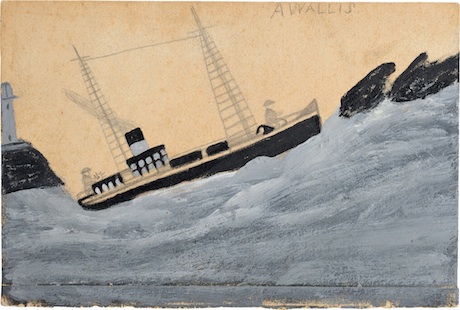
Alfred Wallis, Steamboat with two sailors, lighthouse and rocks, n.d, reserve collection
Andrew Nairne
/ Director's Blog / Monday 14th May
Hello and welcome to our development blog site – we want this to be an active online space where you can find out about the ‘behind the scenes’ stuff, especially at this time of great development for Kettle’s Yard (for details about the new Education Centre that we are building, read more
here
).
All the formal information about what’s on and what’s open can still be found on our main
website
. This site is a more informal space where we’ll invite comments from artists, educators and audiences who we are working with to contribute.
There will be opportunities to find out more about our four Associate Artists who will be working with us during 2012 /13: Mate Bejanru, Matthew Darbyshire, Lorna Macintyre and Jeremy Millar.
Over time this website will grow and a bigger and richer picture of all the activity that Kettle’s Yard is involved with during the building works will emerge.
This is new for us so please do give us feedback and let us know what’s working or not and what you would like to see more of.
To illustrate my first post I’ve chosen one of my favourite paintings from the current
Alfred Wallis exhibition in the gallery
here, a different version of which will go on tour from July.