Kettle’s Yard by Josie Birch / Wednesday 5th February


This is the main content area for a blog post

This is the random Flickr post, all photos taken from: http://www.flickr.com/photos/kettlesyard

This is the main content area for a blog post
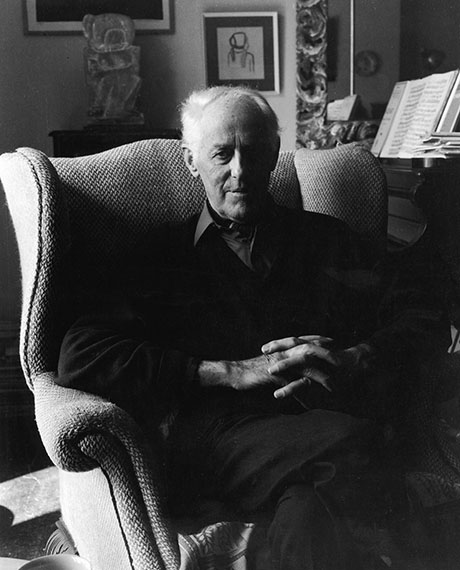
When somebody told me one day, ‘Oh, you should go to Kettle’s Yard’ and I said, ‘Well, what’s that?’ and they said ‘Oh, it’s run by this marvellous character called Jim Ede who is just incredibly welcoming to students and has the most marvellous collection of modern art’, so I lost very little time in going round there. To discover something like Kettle’s Yard on my doorstep was magical actually. I’ll never forget going around there the first time and ringing this ancient doorbell and then this, kind of, slender figure appeared. He opened the door himself and just the most warm welcome, just wonderful. It wasn’t like the University at all. He wasn’t like some sort of terribly serious-minded academic. He was much more free and easy than that. Much more like a friend immediately. Incredibly open and hospitable and very enthusiastic as well.
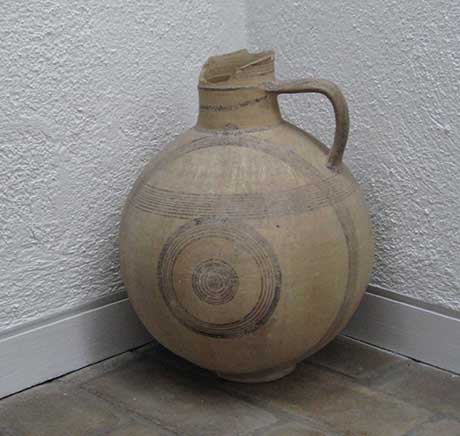
Hello my name is Iman and I’m 9 years old and I found this pot in Kettle’s Yard and it’s really nice, it’s not too big and it’s not too small and it’s not got too much detail on top of it and it’s got a bit chipped from the side but that’s the part that I like, it’s just a bit dull but I still like it. I think it might have been used like somewhere really far like Africa to be used to hold water in. The patterns aren’t too wow they’re like not too much to look at but they are really calm and there’s stripes everywhere and they’ve got this little zig-zag shape on the neck of it. It’s in a really weird place because there are loads of paintings everywhere and you wouldn’t think it was gonna be in a corner really low so no one can see it.
There was no extravagance going on of any kind. No, he wasn’t earning much and he was always giving money away. They weren’t really wanting the things that cost a lot of money, I don’t think. Jim was in that way like… evangelical is the proper word really, a sort of keen missionary. All his life, I think, he wanted people to get the pleasure and authenticity of things looking lovely, indoors as well as out of doors but my mother was terribly keen about nature and about things she saw in the country or at the seaside whereas Jim was more appreciative of things which artists had made very often but they both were very aware of what they were looking at.
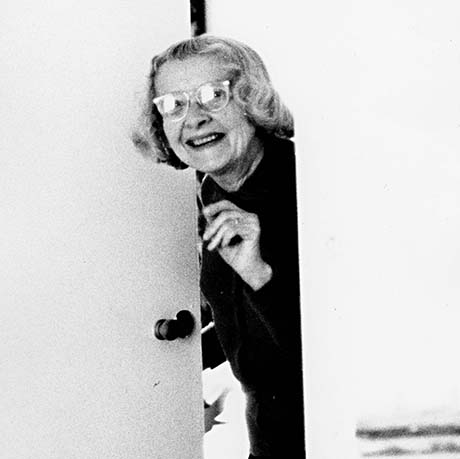
Helen’s love of nature
I had a very great deal in common with her. We shared a great love of nature and of country things and all that. She loved being a peasant and living in the country. Once I was married and we lived in the country, she loved coming down and picking up sticks for the fire and fiddling around, you know, gathering mushrooms and apples and things. She was herself. She sort of blossomed in that environment. She was wrongly placed, I think, in a town, city, arty kind of.. it wasn’t her kind of thing at all, any of it. And she did, certainly at Kettle’s Yard, she made it quite clear it wasn’t her life, she wasn’t taking part in it except to be there and support him and feed him and all that which she did perfectly. But it wasn’t the way she wanted to live and her joy when she used to come and see us, because we were farming, at being just a sort of rustic kind of person was absolutely apparent.
I always remember Helen having a slightly skeptical attitude at times towards parts of the Kettle’s Yard thing if she thought it was… and ‘Och, of course, Jim is just so bent on it that I can’t even put my knitting down anywhere’ and so on. She felt this… the intensity of this could be a little bit much for her. She liked to prick it a bit, and yet in an extraordinary way, she also entered into it.
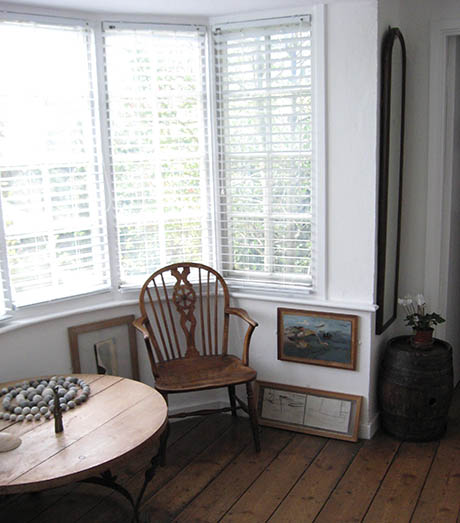
Jim initially went on programming the concerts from Edinburgh so the first year he booked up who the musicians were and then, I think, found that that was too difficult and I found it pretty difficult because I had no… really, all that I knew was that someone would turn up. I hadn’t been involved in the pre-arrangements and so… it never happened that anyone let us down but I probably didn’t even have a contact phone number to follow up if there was a problem. Diana [Gordon] was a wonderful find. Diana had retired very recently as a producer for Radio 3 and she had a wonderful network with impresarios and agents and she knew who was interesting and some of the people who played in the house, Lindsay Quartet comes to mind, were definitely on her personal network and Diana and I worked together very well, very amicably. She had her domain and really I only encroached on that domain in two ways: one, I put out the chairs and put them away again still and stood up at the beginning and, you know, got hush and then went to the green room to get the performers out but; two, I provided the evening meal for them and so I have had at my table and eating my food the most… funnily enough a far wider and more stellar selection of musicians than of visual artists, considering that Kettle’s Yard is primarily a visual place. That was a very beautiful part of the job and nothing ever took away the enjoyment of the music for me.[jwplayer playlistid="271"]
I think it’s worth emphasizing that, as far as I understand, the very idea of domesticity that Jim had was quite unusual in itself. He was apparently always hiding his own personal possessions before visitors came in, for example, so it was not, never, the kind of domestic environment that you’d expect to find when you walk into someone’s home. It was always quite controlled and certainly not something that would have that element of unpredictability and chance, you know, finding things that shouldn’t really be there. Jim was always very aware of the position of pretty much everything so in that sense, you know; it’s not the kind of domestic environment that one would associate with everyday living.
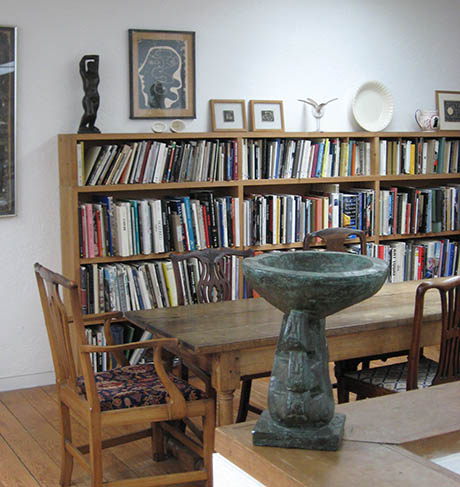
The thing about being able to sit and read in Kettle’s Yard, to look and read simultaneously, seemed to me completely correct actually, that actually it was not the sanctified space of art where one valorised object sits beautifully lit and that you pay homage to it and that everything else is aligned as if there’s nothing there but you and the art object. But it seemed to me utterly so wonderful to be able to sit in an armchair with a David Jones book of poetry and have a Gaudier-Brzeska sculpture in front of you or the pebbles or whatever. It seemed to me that’s actually how life is. What made sense was both the domesticity of it, you know, the house-ness of it. The fact that it had all the different kinds of spaces in which you could be and you could move between them and have different moods, to sit or be in different kinds of spaces and still look at things, but then it was also the encounter between the objects and the house so that again those hierarchies seem to be broached.
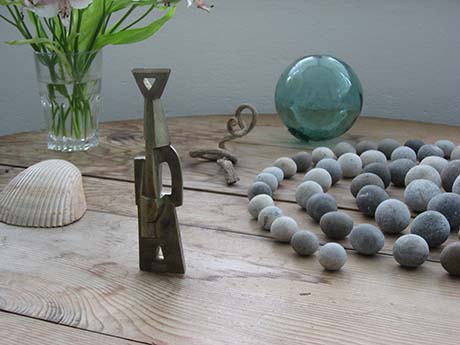
Since there was no stated policy or range of parameters for the collection, the way in which it could have grown without Jim would have been really tricky under any circumstances, I think, and the fact is it is now reverted to being this moment frozen in time, commemoration like the John Soanes Museum, it’s kind of, nobody would think, you know, we must get some more antique sculptures into the John Soanes Museum, it would be mad, the place represents that life and vision and moment in time and I think Kettle’s Yard now, people feel that’s the correct way to treat that house and the collection. There’s no point in adding to it, except for, you know, in fringe ways. The gallery is the place, I began to feel quite soon, and where I got my satisfaction in a way in the job after the initial bliss of being in this beautiful environment had worn off a bit. My creative satisfaction was acquired through the exhibition programme in the gallery where I felt there could be a little bit of even tension and kind of opposition to the overall harmonising aesthetic of the house.
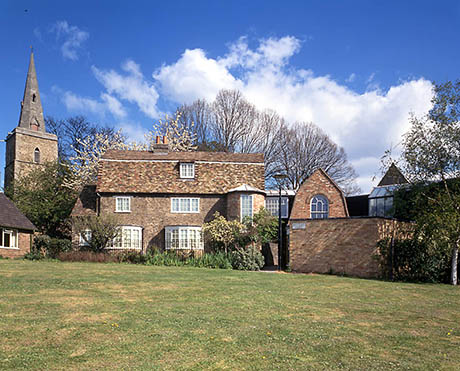
The thing about being able to sit and read in Kettle’s Yard, to look and read simultaneously, seemed to me completely correct actually, that actually it was not the sanctified space of art where one valorised object sits beautifully lit and that you pay homage to it and that everything else is aligned as if there’s nothing there but you and the art object. But it seemed to me utterly so wonderful to be able to sit in an armchair with a David Jones book of poetry and have a Gaudier-Brzeska sculpture in front of you or the pebbles or whatever. It seemed to me that’s actually how life is. What made sense was both the domesticity of it, you know, the house-ness of it. The fact that it had all the different kinds of spaces in which you could be and you could move between them and have different moods, to sit or be in different kinds of spaces and still look at things, but then it was also the encounter between the objects and the house so that again those hierarchies seem to be broached.
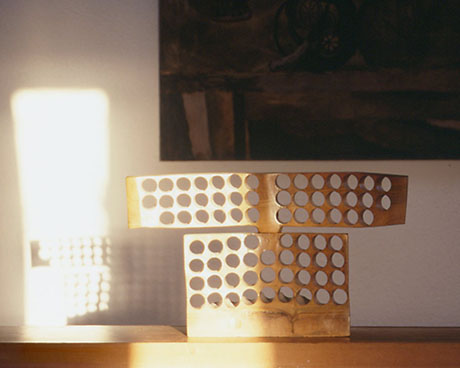
A wood carving by the Romanian sculptor, Ovidiu Maitec, brings us into the present day, and here although we are in the midst of a technological age, we can see that artists still tell us of the beauty of wood, the love of creating an object by hand. In this work, great skill has been used and no doubt, with tools not available in earlier centuries, but the skill and these tools have been used with love and imagination, bringing to a specific object, Radar, a great extension into the world of poetry. There is a subtle changing of forms by cutting the block of wood into a varied and precipitous surface on one side, and swinging the whole into a curve. Each similar hole, as you look through it, presents a different circle, so giving a likeness and a variety to the whole.

Follow us on Pinterest
